

–
ADMIRE Research Group
ADMIRE (Adaptive Distributed Multi-agent Intelligence via Recursive Evolution) is a research group at the State Key Laboratory of Complex and Critical Software Environment at Beihang University. The group is led by Prof. Wenjun Wu.
We study adaptive multi-agent systems in complex environments, focusing on how agents remember, learn, reason, collaborate and evolve. Our research covers software infrastructure for agent coordination and controlled recursive self-improvement, embodied swarm intelligence for drones and robots, and scientific discovery through collaboration among theory, computation and experiment agents.
News
–
–
–
–
Older news
Video Highlights
About the Lab
ADMIRE is based at Beihang University’s State Key Laboratory of Complex and Critical Software Environment.
Research Areas
Built on the RSI foundation and governance of the software space, the group connects the physical/embodied and scientific-discovery spaces, developing key technologies and system frameworks for adaptive agent collectives in complex environments.
Software Foundation and governance for agent collectives
Coordinate agents through Agentic Mesh and support controlled recursive self-improvement.
Research details
A unified runtime and governance foundation (Agentic Mesh) for agents and services across the software, embodied and scientific-discovery spaces, with controlled recursive self-improvement (RSI) through isolated experiments, independent evaluation and progressive release.
- Agentic Mesh governance: runtime, lifecycle, gateway, telemetry, memory and orchestration for agent and service collectives.
- Controlled self-improvement: candidates are generated and tested in isolated sandboxes, filtered by constraints, independently re-evaluated, then released progressively with rollback.
- Domain agents: service composition, microservice root-cause analysis and AIOps, evolving as typical applications on the foundation.
Physical Systems Embodied collective intelligence
Study coordinated control, path planning and validation on physical drones and robots.
Research details
For UAVs, robots and unmanned systems, we combine high-level LLM cognition with multi-agent reinforcement learning, physical priors, safety constraints and real-world feedback.
- Stable control, team consensus, path planning and spatial reasoning enable deployable multi-robot collaboration.
- Symmetry, potential fields and Lyapunov stability improve training efficiency and safety.
- LLM agents generate rewards, organize training, package models and support sim-to-real transfer.
Scientific Discovery Agentic Scientist
Bring theory, computing and experiment agents together to support research automation.
Research details
Scientific problems become verifiable agent workflows, connecting theory, computation, experiments and feedback for scientific computing, AI4Sci and laboratory automation.
- Theory, computing and experiment agents collaborate on literature, hypotheses, simulations and experimental design.
- For PDE solvers and fluid simulation, we connect retrieval, planning, code generation, execution and correction.
- ScienceOS, intelligent computing and robotic/multimodal laboratory equipment support reproducible research automation.
State Key Lab of Complex and Critical Software Environment
Addressing major national needs, the laboratory studies critical software for large complex equipment and space–air–ground real-time systems, focusing on development efficiency, quality assurance and continual evolution.
Research spans complex-system mechanisms and software theory, collective intelligence and collective software engineering, software trustworthiness and quality assessment, and runtime support and continual evolution.
Critical software for complex systems
Critical software is the operational core and infrastructure of complex equipment and space–air–ground real-time systems, linking resources, functions, safety and trustworthiness.
An integrated development and runtime environment
Connecting modeling, development, quality assurance and runtime evolution across the software lifecycle to improve efficiency, quality and continual adaptability.
People
Prof. Wenjun Wu
Professor and doctoral supervisor at Beihang University’s Institute of Artificial Intelligence, leading research in foundation models, multi-agent systems, swarm intelligence and embodied AI.
- Deputy head, National AI Standardization General Group
- Head, Model and Algorithm Standards Research Group, AI Subcommittee of the National IT Standardization Committee
- Expert, National Science and Technology Innovation 2030 New-Generation AI Major Project
- Expert, Intelligent Science and Technology Discipline Panel, Academic Degrees Committee of the State Council
Core Members
-
Kui Zhang
School of Artificial Intelligence, Beihang University
Beijing Beihang Advanced Industrial Technology Research Institute Co., Ltd. -
Jian Ren
School of Computer Science and Engineering, Beihang University
Lecturer, Master’s Supervisor -
Rongye Shi
School of Artificial Intelligence, Beihang University
Associate Professor · PhD Supervisor -
Tianhao Peng
College of Computing and Data Science (CCDS), Nanyang Technological University
Research Fellow
Current Graduate Students
PhD Students
-
Jiabin Lou
2021 intake
Xuehong Liu
2021 intake
Xingchuang Liao
2022 intake
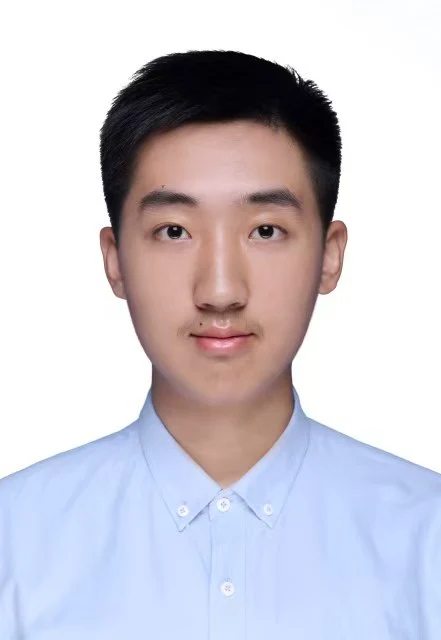
Shuhao Liao
2023 intake

Yuanshuai Wang
2023 intake
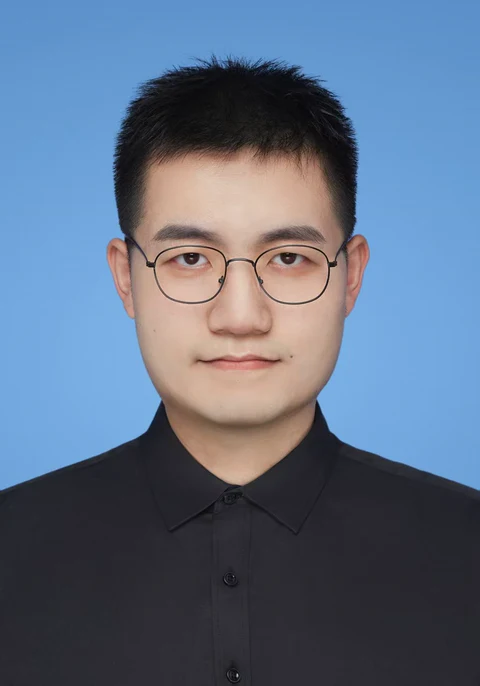
Junle Wang
2023 intake

Xiangdong Wu
2023 intake
Mingming Yu
2023 intake
Diyuan Hou
2023 intake
Yirong Yang
2023 intake
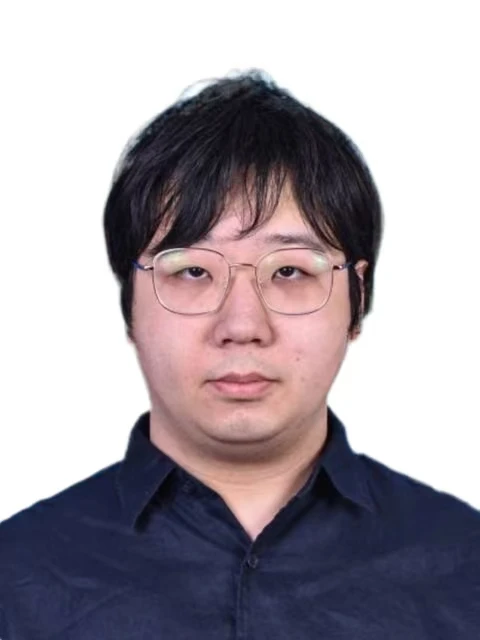
Peihong Dai
2024 intake
Li Wang
2024 intake
Jinkun Zhao
2024 intake
Yuxin Lin
2024 intake
Haopeng Wang
2024 intake
Yandong Wang
2025 intake
Muyao Xu
2025 intake
Yuxin Guo
2025 intake
Xuxin Lv
2025 intake
Lisong Sun
2026 intake
Tianqi Fang
2026 intake
-
Yongkai Tian

Master’s Students
Zhimin Fan
2024 intake
Haixin Ge
2024 intake
Zhichao Yang
2024 intake
Zijian Pan
2025 intake
Jianzhou Feng
2025 intake
Zeping Liu
2025 intake
Xiao Wang
2025 intake
Junchen Wang
2025 intake
Boyang Liu
2026 intake
Jinyang Liu
2026 intake
Xianye Li
2026 intake
Jing Deng
2026 intake
Alumni
PhD Alumni
-
Kui Zhang
Graduation year
School of Artificial Intelligence, Beihang University
Beijing Beihang Advanced Industrial Technology Research Institute Co., Ltd. -
Yihua Lou
TravelSky Technology Limited
Deputy Chief Engineer -
Zhenghui Hu
Hangzhou Innovation Institute, Beihang University
Associate Research Fellow -
Yong Han
Graduation year
PhD cohort of 2015
Ordos Institute of Technology
Full-time Faculty -
Qunbo Wang
Graduation year
Beijing Jiaotong University
Associate Professor · PhD Supervisor -
Yu Liang
Graduation year
College of Computer Science, Beijing University of Technology
Associate Professor · Master’s Supervisor -
Xiaoming Yu
Graduation year
Beijing Wuzi University
Lecturer · Deputy Section Head -
Yanjun Pu
Graduation year
Beihang University
Postdoctoral Researcher -
Pu Feng
Graduation year
Zhongguancun National Laboratory
Assistant Researcher -
Tianhao Peng
Graduation year
College of Computing and Data Science (CCDS), Nanyang Technological University
Research Fellow -
Ruibo Chen
Graduation year
Zhongguancun National Laboratory
Assistant Researcher -
Jingbo Yang
Graduation year
University of Milan
Research Fellow
Master’s Alumni
-
Tengfei Ding
-
Tianrui Jiang
Haoyuan Li
Graduation year
-
Rui Li
-
Junkang Liang
Graduation year
-
Boyu Lin
-
Xuetao Lin
Graduation year
-
Fang Liu
Graduation year
-
Yuchen Qin
-
Caimeng Wang
Master’s cohort of 2018
Xiaohongshu
Senior Algorithm Engineer -
Jiadong Wang
Graduation year
-
Kang Wang
-
Lingfeng Wang
-
Meng Wang
Graduation year
-
Size Wang
Graduation year
-
Yangzhou Wang
-
Zhengjiang Wang
Graduation year
Zhimin Xin
-
Kaiyuan Yang
-
Ke Yin
-
Qiang Yue
Graduation year
Qingle Zhang
Graduation year
-
Song Zhang
-
Pengrui Zhao
Graduation year
-
Wenjia Zhao
-
Yongchi Zhao
Master’s cohort of 2019
StepFun
Foundation Model Researcher -
Yuzhang Zhuang
Group photos
Research Outputs
Research outputs by group members, including work co-authored by Prof. Wenjun Wu. Wenjun Wu’s DBLP bibliography
Papers
Software space: foundation and governance
On the governance foundation for agents and services, we study service composition, workflow scheduling, software quality and AIOps, covering the full loop of runtime sensing, fault localization, collaborative repair and experience reuse.
Embodied Collective Intelligence
Structural priors, reinforcement learning, neural algorithmic reasoning and language models form deployable perception–decision loops for UAVs and robots.
Agentic Scientist for Scientific Discovery
Knowledge augmentation, graph learning and reasoning training help scientific agents understand problems, organize computation and produce verifiable reasoning.
Publication Index
Progressive Subexpression Reuse in Symbolic Regression: Insights from RL-based Search and a Genetic Programming Realization
RGP progressively reuses structures in genetic programming through a subexpression pool and guided population initialization to discover interpretable formulas.
UrbanNav: Learning Language-Guided Embodied Urban Navigation from Web-Scale Human Trajectories
Embodied AI, urban navigation, language-guided navigation
TAS-DAQ: Task-Adaptive Sparse Prediction with Dense Query Auxiliary Supervisory for Efficient 3D Object Detection
3D detection, sparse prediction, multimodal perception
C-NAV: Towards Self-Evolving Continual Object Navigation in Open World
Embodied AI, open-world navigation, continual learning
Soft Knowledge Prompt: Help External Knowledge Become a Better Teacher to Instruct LLM in Knowledge-based VQA
Multimodal QA, knowledge augmentation, LLMs
GraphRARE: Reinforcement Learning Enhanced Graph Neural Network with Relative Entropy
Graph neural networks, reinforcement learning, heterogeneous graphs
Leveraging Partial Symmetry for Multi-Agent Reinforcement Learning
Multi-agent RL, symmetry priors, swarm intelligence
Deep Bayesian Active Learning for Learning to Rank: A Case Study in Answer Selection (Extended Abstract)
Active learning, learning to rank, answer selection
CLGT: A Graph Transformer for Student Performance Prediction in Collaborative Learning
Educational data mining, collaborative learning, graph Transformers
MemOcc: Hierarchical Memory for Indoor Continuous Occupancy Mapping
Embodied AI, continuous occupancy mapping, hierarchical memory
Agents Trainer: Automatically Training Multi-Agent Reinforcement Learning Models for Drone Swarm Using Language Model-Based Agents
LLM agents, multi-agent reinforcement learning, UAV swarms
REMIX: Reusable Experience Memory for Adaptive Web Service Composition
Reusable experience memory adapts service-composition agents to changing tasks and environments.
FLARE: Causal Fault Localization and Minimal Repair for Web Service Composition with LLM Agents
LLM agents locate causal faults in service composition and generate minimal repairs.
TopoEvo: A Topology-Aware Self-Evolving Multi-Agent Framework for Root Cause Analysis in Microservices
Call topology and multimodal signals support evolving multi-agent root-cause analysis in microservices.
STAR: A Stage-attributed Triage and Repair framework for RCA Agents in Microservices
Track errors by diagnostic stage to localize and repair RCA-agent reasoning.
GRACE: A Strategic LLM-Enhanced Graph Reinforcement Learning Framework for Adaptive Fault Recovery in Microservice Systems
LLMs, graph reinforcement learning and recovery policies enable adaptive microservice fault handling.
CoE-Ops: Collaboration of LLM-based Experts for AIOps Question-Answering
Multiple LLM experts combine operational knowledge and reasoning to answer AIOps questions.
BERT4Anno: An Annotation Misuse Detection Method for Java
Pretrained language models detect Java annotation misuse through semantics and context.
SC-COO: A Feedback-Based Service Composition Algorithm Combining Offline and Online Reinforcement Learning
Offline learning and online feedback continually optimize service-composition decisions.
HMSC-LLMs: A Hierarchical Multi-Agent Service Composition Method Based on Large Language Models
Hierarchical multi-agent structures decompose requirements; LLMs cooperate on large-scale service composition.
Graph-Based Ensemble Learning for Enhanced Fault Localization in Microservices
Graph representations and ensemble learning fuse runtime signals for robust fault localization.
ELAKT: Enhancing Locality for Attentive Knowledge Tracing
Self-attention and causal convolutions aggregate and smooth student knowledge states; prediction correction reduces behavioral noise for knowledge tracing.
An Automatic Model Management System and Its Implementation for AIOps on Microservice Platforms
Automated model training, deployment and lifecycle management for microservice AIOps.
Integrating Cognition Cost With Reliability QoS for Dynamic Workflow Scheduling Using Reinforcement Learning
Reinforcement learning optimizes dynamic workflow scheduling under cognitive cost and reliability QoS.
MicroEGRCL: An Edge-Attention-Based Graph Neural Network Approach for Root Cause Localization in Microservice Systems
Edge-attention graph networks model microservice dependencies to trace root causes through fault propagation.
Dependable Workflow Scheduling for Microservice QoS Based on Deep Q-Network
Deep Q-networks schedule microservice workflows for reliability and service quality.
API Misuse Detection Method Based on Transformer
Transformers model API-use context to detect call patterns that may cause defects.
Parallelizing Automatic Model Management System for AIOps on Microservice Platforms
Parallel model-management workflows accelerate automated analysis in microservice AIOps.
Workflow Recommendation Based on Graph Embedding
Graph-encoded workflows and component relationships enable structure-aware recommendations.
Multi-Indicators Prediction in Microservice Using Granger Causality Test and Attention LSTM
Causal tests and attention-based time-series models forecast microservice metrics for early anomaly warnings.
Learning to Handle Exceptions
Neural networks learn Java exception-handling patterns, predict try-block locations and generate catch code.
Structural entropy guided hierarchical symmetric multi-agent reinforcement learning
Swarm intelligence, hierarchical symmetry, multi-agent RL
Offline constrained policy optimization with safe anchoring
Offline RL, safety-constrained optimization
Decoupling Understanding from Reasoning via Problem Space Mapping for Small-Scale Model Reasoning
Problem-space mapping, small-model reasoning, reinforcement learning
Lyapunov-Informed Multi-Agent Reinforcement Learning for Multi-Robot Cooperation Tasks
Lyapunov stability, multi-robot cooperation, multi-agent RL
Symmetry-Informed MARL: A Decentralized and Cooperative UAV Swarm Control Approach for Communication Coverage
Symmetry priors, UAV swarm control, communication coverage
Neural Algorithmic Reasoners informed Large Language Model for Multi-Agent Path Finding
LLMs, neural algorithmic reasoning, multi-agent path planning
Exploiting Hierarchical Symmetry in Multi-Agent Reinforcement Learning
Hierarchical symmetry, equivariant policies, multi-agent RL
AdaptAUG: Adaptive Data Augmentation Framework for Multi-Agent Reinforcement Learning
Adaptive data augmentation, multi-agent RL
Hierarchical Consensus-Based Multi-Agent Reinforcement Learning for Multi-Robot Cooperation Tasks
Hierarchical consensus, multi-robot cooperation, multi-agent RL
AeroWeaver: An Embodied-Agent Harness for Weaving Aerial Skills into Distributed, Adaptive Swarm Execution
Multi-UAV coordination · LLM task orchestration · MIT
VoLN: Vision-Only Long-Horizon Navigation—Paradigm, Benchmark, and Method
Vision-only navigation · Multimodal models · MIT
Growth and Adaptive Evolution of Complex Software Systems
复杂软件系统的成长性构造与适应性演化
Selected Papers & Architectures
STAR: A Stage-attributed Triage and Repair framework for RCA Agents in Microservices
Stage-wise audit, localization, patching and replay make RCA-agent diagnosis traceable and repairable.
TopoEvo: A Topology-Aware Self-Evolving Multi-Agent Framework for Root Cause Analysis in Microservices
Diagnostic agents combine topology and multimodal observations, locating root causes and updating symptom knowledge from experience.
CoE-Ops: Collaboration of LLM-based Experts for AIOps Question-Answering
Retrieval-augmented task classification and two-stage routing select suitable LLM experts for AIOps tasks.
Multi-agent Service Composition
Planning, retrieval, execution, aggregation and supervision roles enable cooperative services and dynamic feedback.
Hierarchical Consensus-Based Multi-Agent Reinforcement Learning for Multi-Robot Cooperation Tasks
Local interactions build hierarchical consensus, which informs policy and value networks for stable robot cooperation.
AdaptAUG: Adaptive Data Augmentation Framework for Multi-Agent Reinforcement Learning
Training feedback selects data augmentation adaptively for robust multi-agent policies under changing observations and environments.
Neural Algorithmic Reasoners informed Large Language Model for Multi-Agent Path Finding
Cross-attention links LLMs and graph neural algorithmic reasoners for semantic understanding and structured multi-agent path planning.
Exploiting Hierarchical Symmetry in Multi-Agent Reinforcement Learning
Hierarchical symmetries, clustering, remapping and equivariant action modules improve policy generalization.
Progressive Subexpression Reuse in Symbolic Regression: Insights from RL-based Search and a Genetic Programming Realization
A dynamic subexpression pool and guided initialization reuse useful structures to discover interpretable formulas.
Decoupling Understanding from Reasoning via Problem Space Mapping for Small-Scale Model Reasoning
Map natural-language questions to structured problem spaces, then iterate self-distillation and RL to stabilize small-model reasoning.
Soft Knowledge Prompt: Help External Knowledge Become a Better Teacher to Instruct LLM in Knowledge-based VQA
Selected external knowledge becomes soft prompts and combines with visual features for knowledge-based visual QA.
GraphRARE: Reinforcement Learning Enhanced Graph Neural Network with Relative Entropy
Relative entropy and deep RL adapt graph topology to improve node representations and classification on heterophilic graphs.
Books & Chapters
Chapters
Patents
Mechanism Discovery with Reinforcement Learning and Genetic Programming
Inventors include Wenjun Wu
Panoramic Image Segmentation Method and Apparatus
Inventors include Wenjun Wu
Evaluating Multimodal Model Hallucinations under Textual Interference
Inventors include Wenjun Wu
Indoor Robot Inspection with Large Language Models
Inventors include Wenjun Wu
Fault Localization in Microservice Systems
吕海、吴文峻、郭洋、徐敏、于卓、许畅、吴跃、于笑明、赵煜阳、郝艳亚
Modeling and Prediction of Chaotic Systems with Graph Neural Networks
Inventors include Wenjun Wu
Efficient 3D Object Detection for Outdoor Embodied Agents
Inventors include Wenjun Wu
Deep Knowledge Tracing with Graph Neural Networks
吴文峻、彭天豪、岳强、戴佩宏、刘放、任健
Multimodal Modeling with Large and Small Model Collaboration
Inventors include Wenjun Wu
Multi-Agent Target Assignment with Fast and Slow Reasoning
Inventors include Wenjun Wu
Flow Field Prediction with Multi-Agent Symbolic Regression
Inventors include Wenjun Wu
Dynamic Graph Neural Network Recommendations with Contrastive Learning
吴文峻、彭天豪、王政江、戴佩宏、赵鹏瑞
Power System Work Ticket Generation
吕海、吴文峻、欧阳红、王思宁、余沫、郝庆利、于卓、于笑明、郝艳亚、宋亚琼、廖星创
Personalized Intelligent Tutoring for Novice Programmers
吴文峻、梁堉、武丽莎、韩勇
Edge Data Processing for Power IoT Systems
吕海、吴文峻、刘晗、雷晓萍、王心妍、于卓、闫丽景、李帅、于笑明、郝艳亚、廖星创
Faulty Node Identification
李君婷、纪鑫、张奎、谭晶、项楠、张文雅、吴文峻、郝文科、陈睿博、董林啸
Anomaly Detection for Microservices
陈屹婷、谭晶、项楠、赵天成、李君婷、吴文峻、马永、张靖、王青亮、张文雅、陈睿博
Active Learning for Deep Answer Recommendation
吴文峻、汪群博、赵永驰、辛治旻
BPMN-Based Microservice Workflow Import
吴文峻、于笑明、廖星创
Developer Recommendation for Crowdsourced Software Projects
胡征慧、吴文峻、李勃舒、王蕴红、刘庆杰
Selection of Workflow Management Nodes for Microservices
吕海、吴文峻、李海涛、杨竞奋、于卓、马军伟、于笑明、张琪、廖星创、张波
Business Process Recommendation for BPM Platforms
吕海、吴文峻、于笑明、于卓、张德海、王大帝、郝庆利、廖星创
BPMN-Based Microservice Workflow Deployment
吴文峻、于笑明、王洋洲
Intelligent Code Detection and Repair System
吴文峻、梁堉、杨京波
Scientific Workflow System and Method for Cloud Platforms
吴文峻、孙吴昊、赵德栋、蒲彦均
Data Deduplication Method for Backup Tasks
Inventors include Wenjun Wu
Adaptive Streaming System for High-Quality Online Course Video
Inventors include Wenjun Wu
Simulation System and Method for Crowdsourced Software Development
Inventors include Wenjun Wu
Real-Time Quality Adjustment for Regions of Interest in HD Video
楼奕华、于海亮、王梦云、吴文峻
Kinect Gesture Control for Tiled Displays
楼奕华、张海阔、吴文峻
Energy-Aware Data Backup for Data Centers
Inventors include Wenjun Wu
Energy-Efficient Unified Resource Scheduling for Cloud Data Centers
Inventors include Wenjun Wu
Software Copyrights
These registrations are listed on ADMIRE alumnus Qunbo Wang’s Beijing Jiaotong University faculty page.
Facilities
Explore experimental spaces, robots, specialized equipment and simulation environments, with Beihang and collaborating-team resources identified separately.
Facilities Overview
01Experimental Spaces
The Beihang Beijing space covers 100 m²; collaborating-team space is approximately 200 m². Indoor sandbox and coordination experiments are supported by motion capture and documented field trials.
Three motion capture systems provide position and orientation measurements for trajectory observation, coordinated control and simulation-to-real coordinate mapping.
More Space Photos
Field Trial Records
Heterogeneous Air–Ground Field Platform
UAV deployment, ground vehicles and swarm return
02Robotic Platforms
UAVs, ground and quadruped robots, mobile manipulators and dual-arm platforms support different experimental tasks; model and quantity details are in the inventory.
Models, quantities & resource scope
Equipment inventory (including collaborating resources)
The source inventory totals 176 units/systems across Beihang platforms and collaborating teams; it is not a count of resources independently owned by the group.
UAVs · 140 aircraft
| Platform | Count | Experimental use |
|---|---|---|
| AMOVLAB P230 | 20 | Onboard visual navigation, trajectory tracking and multi-UAV control |
| Bitcraze Crazyflie | 50 | Indoor formations, trajectories and swarm policies |
| Ryze Tello | 20 | Lightweight vision and flight programming |
| Collaborating team UAVs (multiple models) | 50 | Collaborating team resources |
Ground Mobility & Inspection · 21 robots
| Platform | Count | Experimental use |
|---|---|---|
| SCOUT | 3 | Navigation and multi-vehicle coordination |
| SCOUT MINI R&D KIT | 1 | Indoor/outdoor navigation and path planning |
| LIMO | 9 | Multi-robot navigation and sandbox tasks |
| YUHESEN FW-mid | 3 | Lateral motion and path tracking |
| Unitree Go2 EDU | 5 | Quadruped navigation, inspection and vehicle–quadruped coordination; 3 at Beihang and 2 with the collaborating team |
Mobile Manipulation · 15 systems
| Platform | Count | Experimental use |
|---|---|---|
| SCOUT + Manipulator | 2 | Mobile grasping and transport |
| TRACER + PiPER | 2 | Mobile grasping and visually guided navigation/manipulation |
| LIMO COBOT | 10 | Pick-and-place, transfer and visual demonstrations; 5 at Beihang and 5 with the collaborating team |
| COBOT MAGIC | 1 | Bimanual teleoperation, demonstration collection and imitation learning |
More Platform Photos
Multi-Agent CoordinationRobot Manipulation & Autonomous Motion
Platforms & Demos
Multi-Agent Coordination
Experiments cover joint simulation and physical validation, indoor UAV formations, and air–ground tasks in an urban sandbox.
Air–Ground Sim-to-Real Platform
Three-phase mission (target search, coordinated strike, air-ground escort) verified on simulated and physical swarms in sync
Multi-agent Cooperative Control Platform
Multi-agent simulation and indoor UAV formation experiments
Urban Sandbox Air-Ground Testbed
UAV and ground-vehicle experiments among model roads and buildings
Navigation & Agentic UAV Systems
AERIS, VoLN and AeroWeaver study runtime orchestration, vision-only long-horizon navigation and coordinated aerial skills, respectively.
AERIS
Assigns roles to language-model agents across aerial and edge systems for runtime task coordination.
VoLN · Vision-Only Long-Horizon Navigation
Studies vision-only long-horizon UAV navigation using target images and visible cues, with simulation and real-flight demonstrations.
View publicationProject websitePreprint
View method figure
AeroWeaver
Maps natural-language tasks to aerial skills, with distributed agents coordinating execution and feedback.
View publicationResearchPreprint
Robot Manipulation & Autonomous Motion
Four demonstrations cover dual-arm manipulation, cooperative navigation, autonomous exploration and quadruped control; select each in the playlist.
Embodied AI & Robotics Platform
Dual-arm manipulation, cooperative navigation, exploration and quadruped control
03Specialized Equipment
Intelligent Cockpit & Multimodal Human Factors
BJUT platforms at the Beijing Key Laboratory of Embodied Interaction Intelligence. This equipment is presented separately and is not included in the robot inventory above.
Built around CARLA, three screens display the road, surround and rear views, dashboard and task interface. A steering wheel supports simulated driving experiments.
- Synchronized sensing
- Cameras, microphones and EEG sensors synchronously record visual behavior, speech interaction and physiological signals.
- Comfort research
- Facial expressions and EEG features support research into personalized driving style matching.
- Safety research
- Driving state and regional brain activity are analyzed to study distraction and fatigue alerts.
EEG Acquisition & OpenBCI Analysis
An electrode cap connects to an OpenBCI Cyton biosignal amplifier. A USB receiver relays digitized signals wirelessly to OpenBCI GUI for live display and session recording.
- Acquisition & integration
- CSV and BDF+ export and LSL, UDP and OSC streaming support further analysis and platform integration.
- State visualization
- Focus and relaxation estimates, with topographic maps of brain activity.
Tri-Optical Gimbal & Power Line Inspection
The tri-optical gimbal and sensors support airborne perception and stable-imaging research. Algorithms, the inspection platform and demonstrations are grouped in the system case study.
Intelligent Inspection
Intelligent Inspection
Tri-Optical Gimbal & Power Line Inspection
A State Grid headquarters research project supports an intelligent gimbal for a dual-flying-wing VTOL UAV, combining onboard AI edge recognition with stable imaging during high-speed cruise.
- Fusion recognition
- Visible-light and infrared feature matching combines four-stage data augmentation with an edge recognition algorithm using a recursive attention head.
- Stable imaging
- Onboard AI edge processing and AI servo control support power line imaging during high-speed cruise.
- Detection & analysis
- A digital twin platform displays defects, statistics and spatial locations. The iFLYTEK Spark language model generates inspection reports and supports conversational queries.
Algorithms & Engineering Results
The gimbal was exhibited on a collaborating organization’s dual-flying-wing UAV at the 2025 Changchun Air Show.
Gimbal stabilization
Animated demonstration of the gimbal hardware and stabilization.
Animated demo
Visible-light and infrared inspection
Visible-light and infrared footage with object detection during flight.
Animated demo
Power line defect detection
Inspection task configuration and detection results.
Animated demo
Detection statistics & visualization
Detection summaries, charts and visual analysis.
Animated demo
AI inspection assistant
Detection results, map views and conversational interaction.
Animated demo
AI inspection report
Power line inspection reports generated from detection data.
04Computing & Simulation
Simulation & Robot Software
Existing capabilities
The Tianji platform supports simulations with hundreds of agents using Unreal scenes and containerized services. Existing experiments cover MARL pursuit, robot navigation, manipulation demonstrations, policy training and real-robot testing.
In development
Harness is being developed to unify high-level tasks, commands and status across heterogeneous platforms through chassis and quadruped SDK adapters. The initial target is collaborative language-guided navigation with one vehicle and one quadruped, followed by UAV integration.
The Isaac Sim / Isaac Lab pipeline is under development, spanning modeling, unified observations, collaborative policy training, robustness validation, ROS 2 deployment and evaluation feedback, while reusing established low-level controllers.
Scenarios & Collaborative Tasks
Existing methods include knowledge-enhanced visual question answering, 3D object detection, language-guided navigation and multi-agent learning. Future collaboration targets collaborative perception, active exploration, cross-region inspection, mobile manipulation and long-horizon coordination, with jointly defined tasks and evaluation.
Academic Exchanges
Conferences, academic visits and research collaboration
Domestic & International Partnerships
The group maintains long-term international collaborations with the National University of Singapore, Nanyang Technological University and Politecnico di Milano, and conducts joint research with the Shanghai Artificial Intelligence Laboratory, Zhongguancun Laboratory, Qianyuan Laboratory and Qiyuan Laboratory (all four are national laboratories), advancing research collaboration and joint doctoral training.
National University of Singapore · Nanyang Technological University
Collaboration spans agents, multi-robot cooperation, swarm intelligence and large language models; several group members have visited Singapore for academic exchange and collaborative research.



National Laboratory Partnerships
Long-term collaboration with the Shanghai Artificial Intelligence Laboratory, Zhongguancun Laboratory, Qianyuan Laboratory and Qiyuan Laboratory (all four are national laboratories) focuses on software agents, LLM safety, embodied AI and complex intelligent systems, alongside joint doctoral training.
- Learning to handle exceptions(Software engineering)
- ELAKT: Enhancing Locality for Attentive Knowledge Tracing(Data mining)
Politecnico di Milano
Sustained collaboration on complex systems, intelligent decisions and interdisciplinary science, including visits by PhD students and postdoctoral researchers.
ACL 2024
Tianhao Peng attended the 62nd Annual Meeting of the Association for Computational Linguistics in Bangkok.
IJCAI-ECAI 2026 exchange
Group members attended IJCAI-ECAI 2026 in Bremen, Germany, presenting symbolic regression research in talks and posters and discussing interpretable formula discovery, search mechanisms and AI for science.
Observing progressive subexpression reuse in reinforcement-learning search, this work proposes RGP, a genetic programming method that maintains a dynamic subexpression pool, retaining useful structures and reintroducing them into later searches to build more complex expressions.
- Featured paper · RGP
- Progressive Subexpression Reuse in Symbolic Regression: Insights from RL-based Search and a Genetic Programming Realization
ICWS 2026 exchange
Group members attended the IEEE International Conference on Web Services (ICWS 2026) in Sydney, presenting STAR and TopoEvo and exchanging ideas on microservice root cause analysis, AIOps and multi-agent collaboration.
- STAR · Diagnosing and repairing reasoning
- Root cause analysis is divided into evidence, hypothesis, analysis and decision stages. STAR identifies the stage responsible for diagnostic errors and improves agent reliability through targeted repairs and downstream replay.
- TopoEvo · Topology awareness and self-evolution
- Combines multimodal observations, topology constraints and multi-agent reasoning to distinguish fault sources from propagated symptoms, adapting to changing microservice environments through incident-memory updates.
ICRA 2026 exchange
Group members attended ICRA 2026 in Vienna to exchange ideas on robot perception and embodied intelligence, presenting MemOcc research on continuous indoor occupancy mapping during the poster session.
- Topics
- Robot perception · 3D scene understanding · Embodied intelligence
Hard&Soft competition and academic visit
Team members took part in the Hard&Soft international competition in Romania, demonstrating a self-developed smart wristband for fall detection and alerts in hardware demonstrations, technical defenses and on-site evaluations. They exchanged ideas with international teams and visited laboratories at Ștefan cel Mare University of Suceava.
- Topics
- Smart hardware · Fall detection and alerts · Hardware–software integration
AAAI 2026 paper presentation and exchange
Group members attended the 40th AAAI Conference in Singapore to present DURIT. The work decouples understanding from reasoning through problem-space mapping to improve small language models’ reasoning capabilities, and was discussed with conference participants.
- Featured paper · DURIT
- Decoupling Understanding from Reasoning via Problem Space Mapping for Small-Scale Model Reasoning